
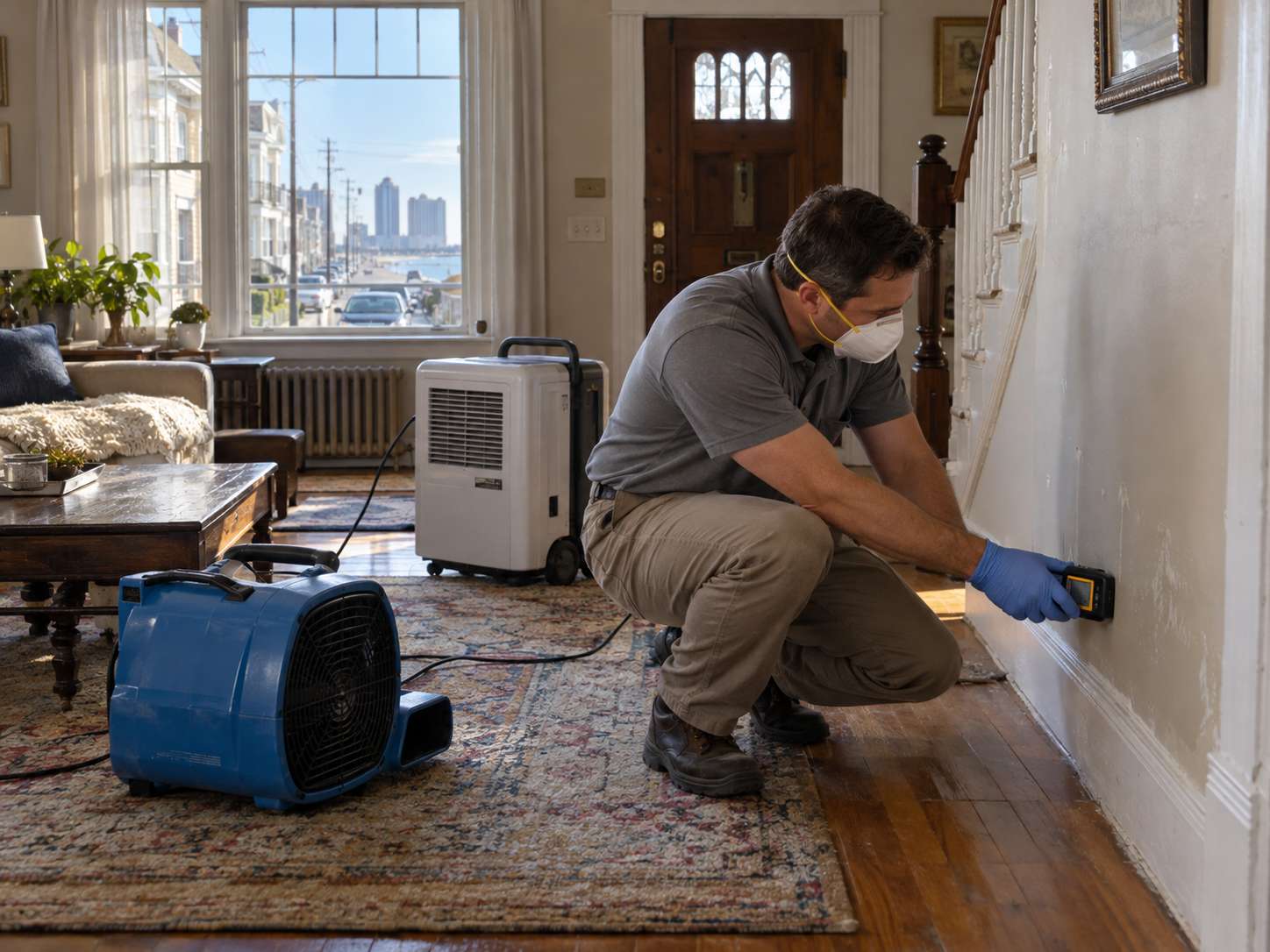
Mold Remediation in Atlantic City, NJ
Atlantic City sits on Absecon Island, with the ocean on one side and the back bays on the other. That location brings salt air, steady humidity, and regular flooding. Each of those can lead to mold inside homes and buildings.
MasterTech Environmental Jersey Shore provides mold inspection, testing, and remediation for Atlantic City property owners. We have served the Jersey Shore since 2017. Our team finds the moisture source, removes the mold safely, and explains each step along the way.
Why Mold Shows Up in Atlantic City Homes
Flooding from the bay and the ocean
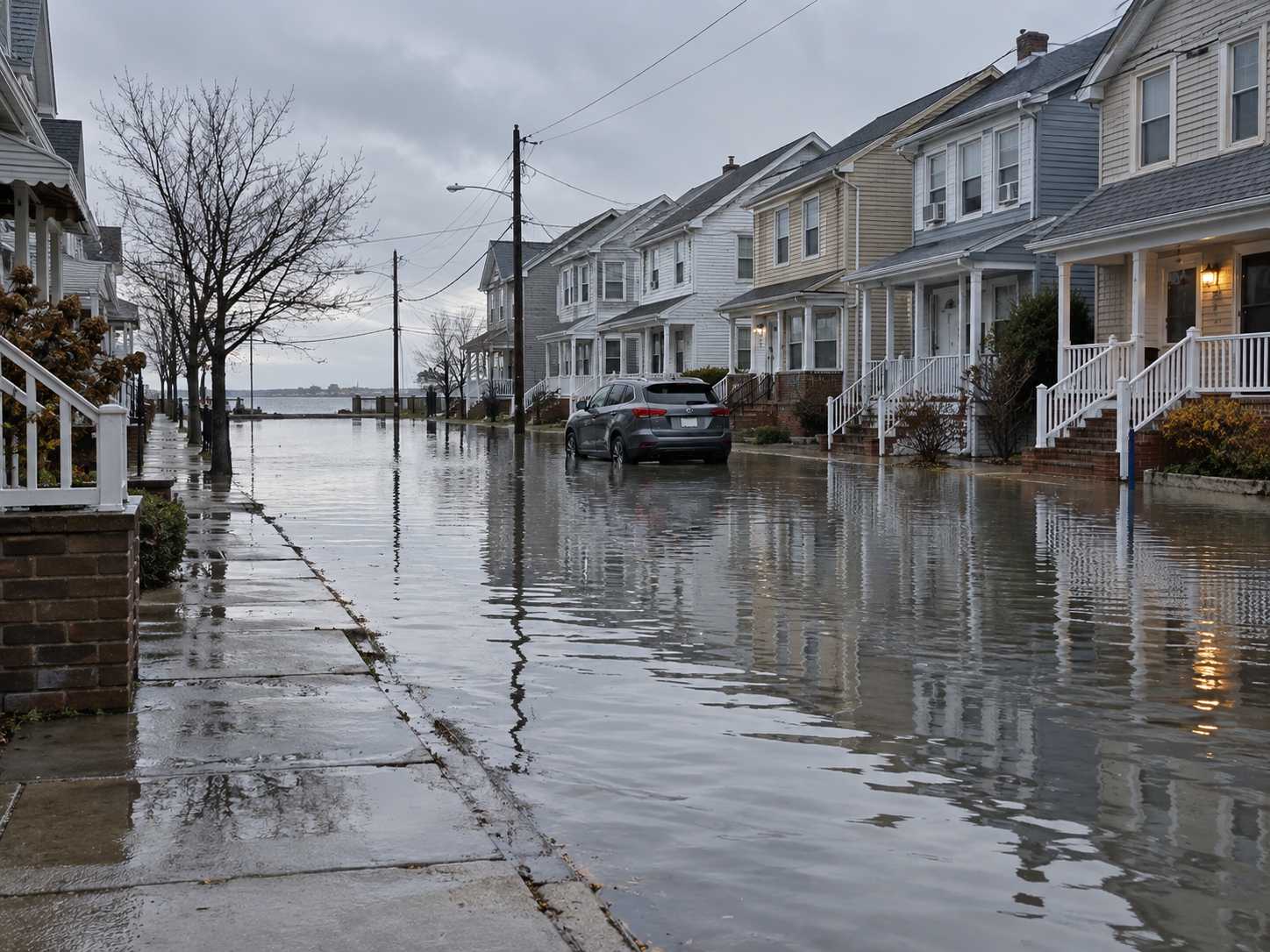
Storm surge, heavy rain, and high tides all push water into low-lying streets. NOAA predicts 15 to 20 high tide flooding days for the Mid-Atlantic coast between May 2026 and April 2027. Even shallow water can soak drywall, flooring, and insulation. Once those materials stay wet, mold can follow within days.
Salt air and constant humidity
Ocean air keeps indoor humidity high for much of the year. Bathrooms, closets, and crawl spaces often stay damp. Without good ventilation, condensation forms on cool walls, windows, and ductwork.
Older buildings and shared walls
Many Atlantic City homes are older rowhomes, duplexes, and condo buildings. In these properties, a leak in one unit can spread into the next. Mold may start behind a wall you share with a neighbor.
Seasonal homes and rentals left closed up
Vacation homes and rentals often sit empty between guests or over the winter. With the air conditioning off, humidity builds and nobody notices a slow leak. Our guide to protecting a shore house from mold covers simple steps for owners.
Our Mold Services in Atlantic City
Every job starts with a careful inspection. We look for visible growth, measure moisture, and track down the source. When needed, mold testing shows what is in the air and how far the problem has spread.
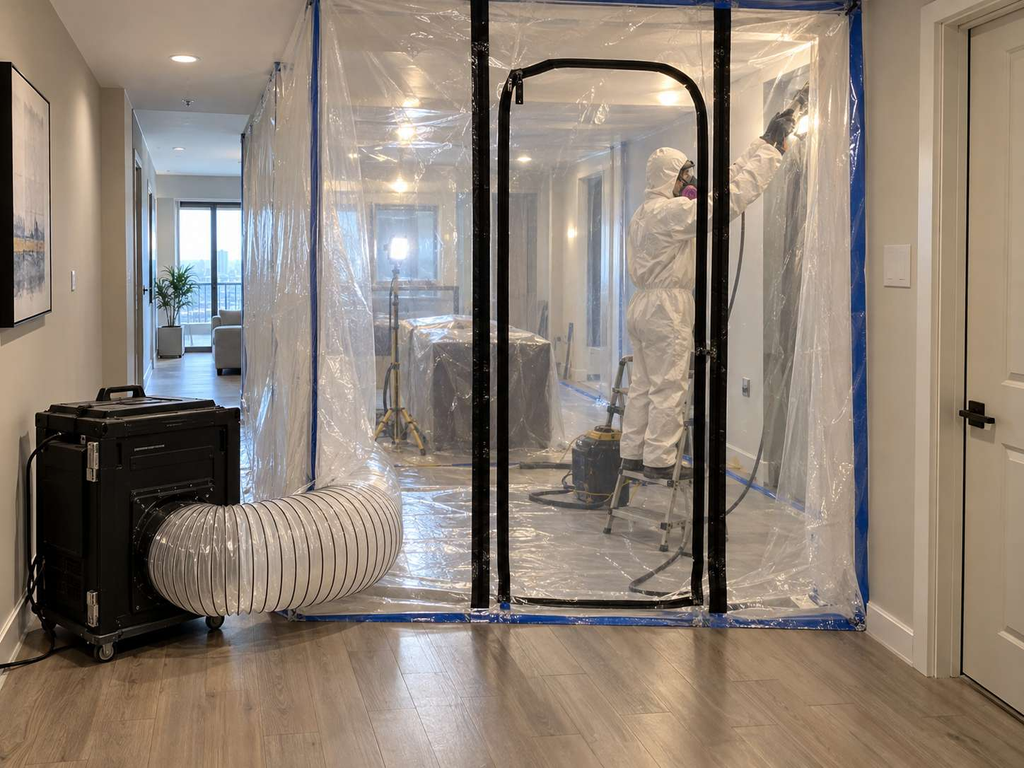
From there, our mold removal process follows a clear plan:
- set up containment to keep spores out of clean areas
- run negative air and HEPA filtration during the work
- remove or clean affected materials
- dry the area and address the moisture source
- review the finished work with you
We also handle crawl space mold and water damage restoration after floods and leaks.
When the work is done, we walk you through what was removed and what caused the problem. You also get practical tips for keeping moisture down. Simple habits, like running a dehumidifier in summer, go a long way near the water.
What to Do After a Flood or Leak
Time matters after water gets inside. According to the EPA, mold will not grow if wet items are dried within 24 to 48 hours. After that window, the risk climbs quickly.
If your Atlantic City home takes on water, take these steps:
- stop the source of water if you can do it safely
- move rugs, furniture, and boxes out of wet areas
- run fans and a dehumidifier to start drying
- take photos for your insurance company
- call for an inspection if materials stayed wet longer than two days
The EPA also notes that larger jobs, over 10 square feet, may need a trained remediation professional.
Who We Help in Atlantic City
We work with homeowners, condo owners, and property managers across the city. Landlords and tenants often call us when mold appears in a rental. Our article on landlord responsibility for mold in NJ explains the basics. We also help buyers, sellers, and agents through our real estate mold inspections.
Why Atlantic City Property Owners Call MasterTech
Our customers often mention the same things. We call back quickly, explain what we find, and price the work fairly. We use containment and HEPA filtration on every remediation job. Each remediation is also backed by our 5-Year Mold Free Warranty.
Our office is in Toms River, and we travel throughout Atlantic County. Atlantic City customers get the same process and care as our customers closer to home.
Atlantic City Mold FAQs
Yes. We schedule mold inspections and remediation in Atlantic City and across Atlantic County. Call us to book a visit.
We check for visible growth, measure moisture in walls and floors, and look for the source. If needed, we take air or surface samples. Then we explain what we found and what we recommend.
Yes. Leaks and moisture move through shared walls, floors, and ceilings. Finding the true source is the first step to a lasting fix.
Call as soon as you can. Wet materials should be dried within 24 to 48 hours. After that, mold growth becomes much more likely.
Schedule a Mold Inspection in Atlantic City
Call 732-716-2384 or contact us to schedule an inspection. We will find the cause, explain your options, and help you get your home back to normal.